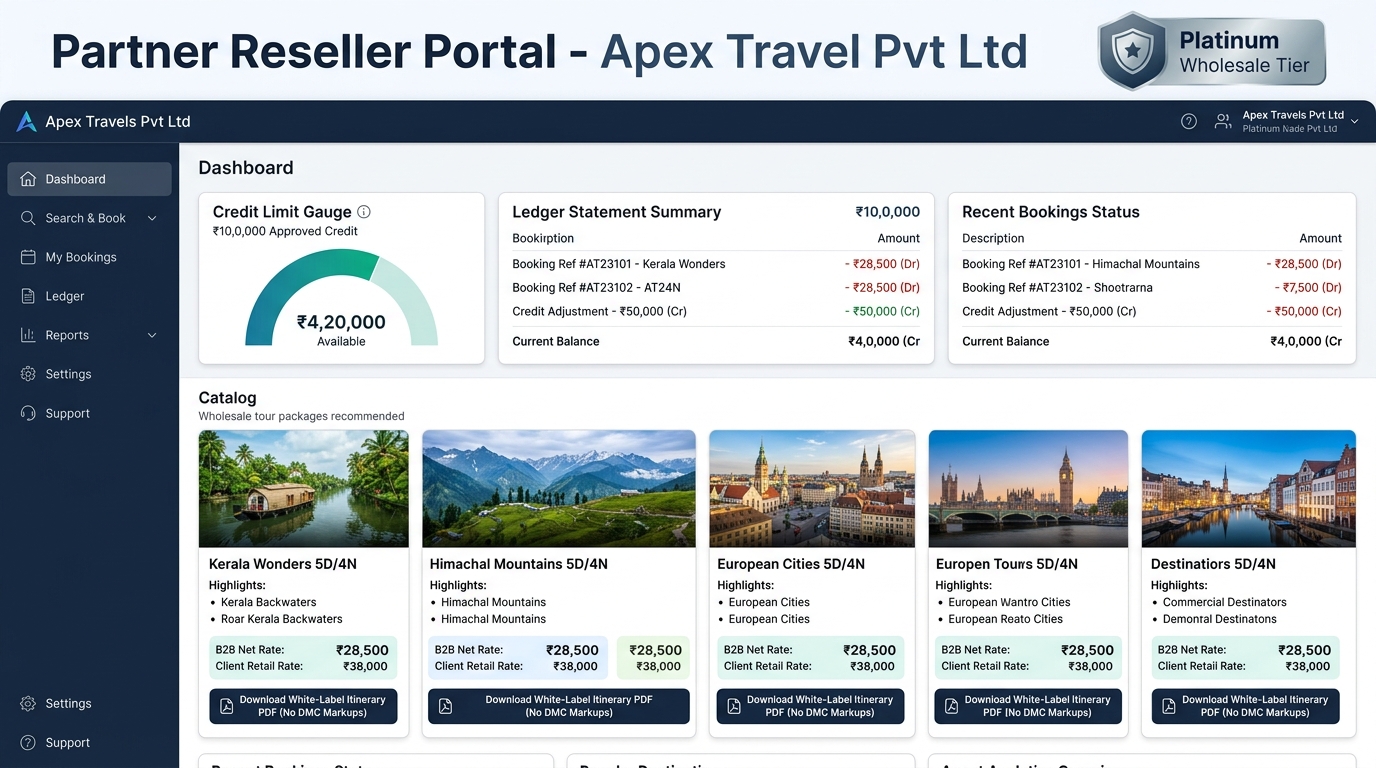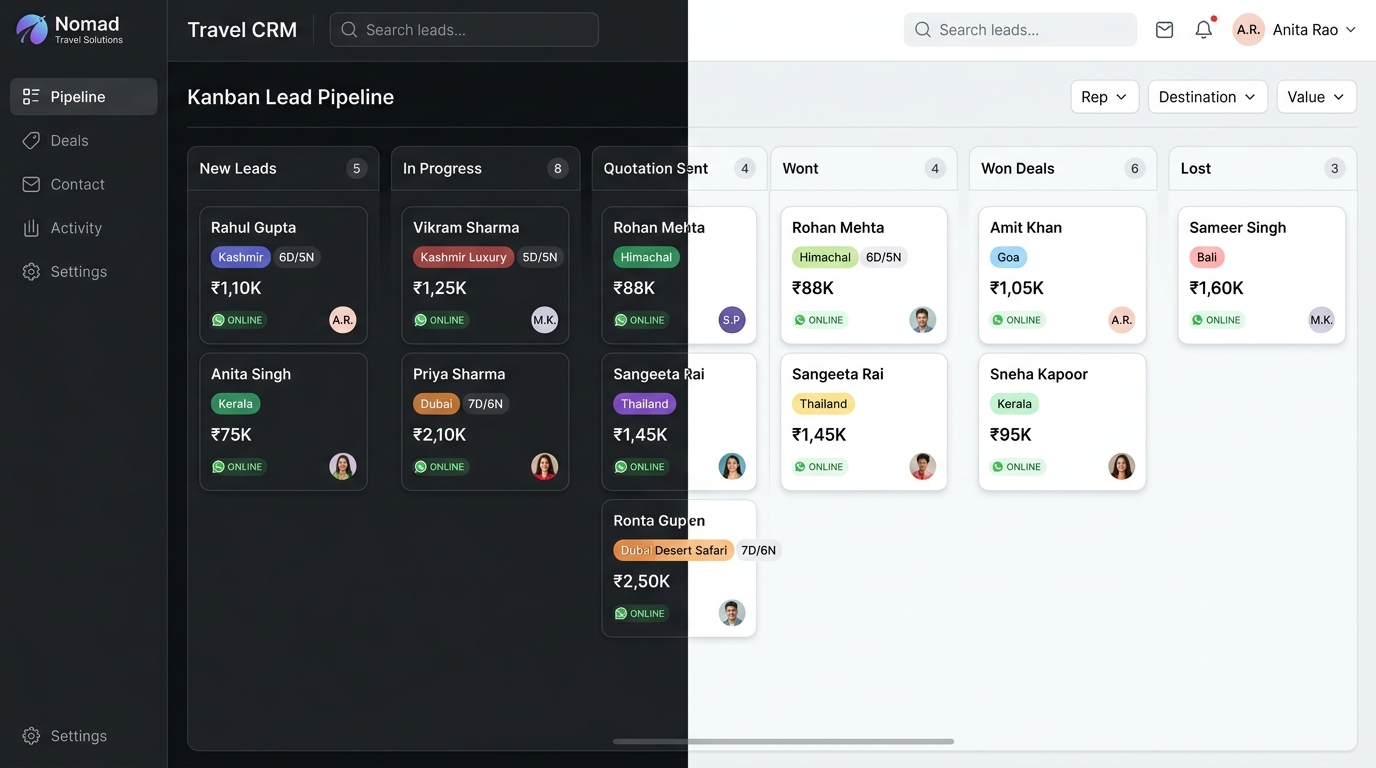
Every month, travel agency founders spend thousands of dollars attempting to customize generic SaaS platforms like HubSpot, Zoho CRM, or Salesforce to match their tour business operations. Within six months, over 80% abandon these tools and revert back to messy spreadsheets.
1. Generic CRMs Lack Travel Inventory Logic
In a standard CRM, a "Product" is a static physical item (like a laptop or software license). In the travel industry, a tour package is a living, multi-layered inventory bundle consisting of:
- Hotel room allotments across seasonal dates (Peak, Shoulder, Off-Peak).
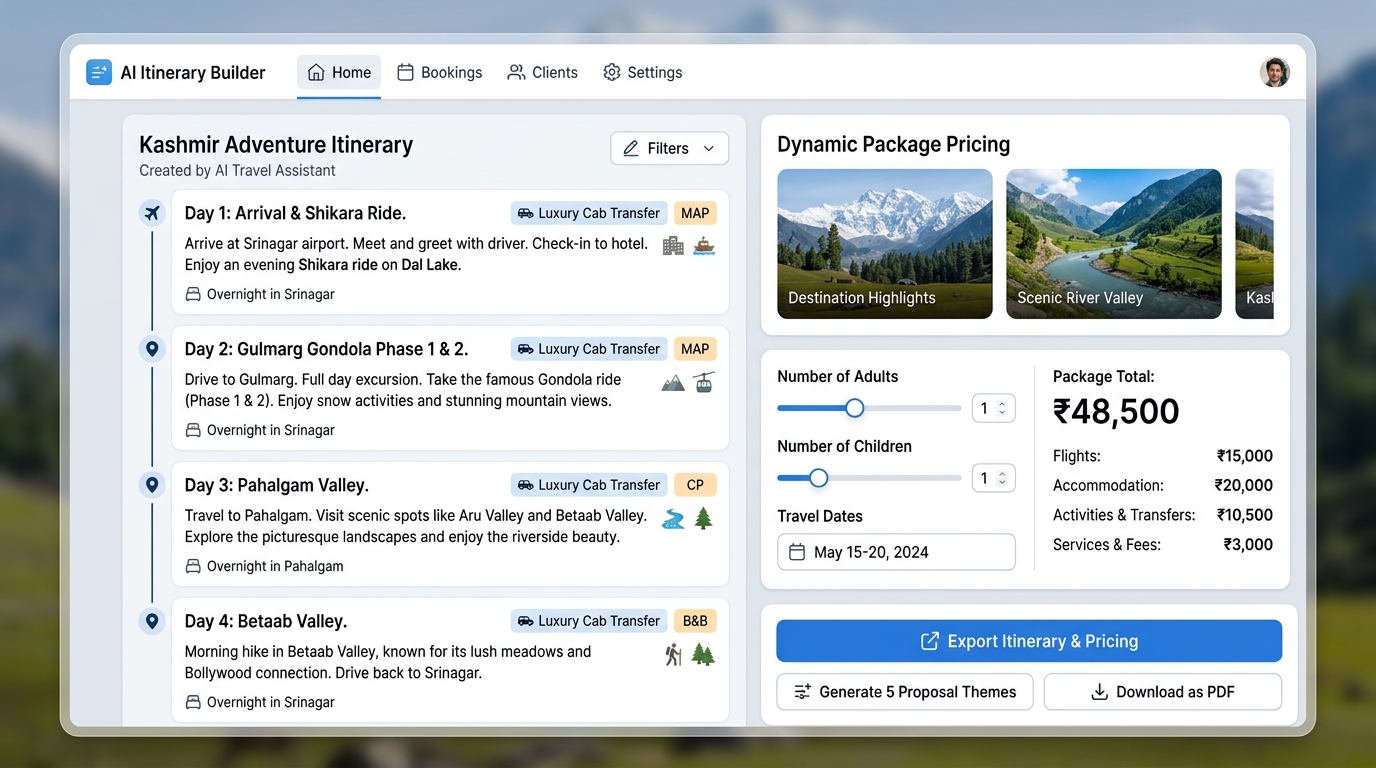
- Specific meal plan regimes: EP (Room Only), CP (Breakfast), MAP (Breakfast + Dinner), and AP (Full Board).
- Vehicle category capacities (Sedan 3-Pax, Innova 6-Pax, Tempo Traveler 12-Pax).
- Extra bed and child occupancy surcharge algorithms.
2. The Itinerary Quotation Problem
Salesforce or HubSpot can send a standard text quote with line items, but they cannot compile a day-by-day sightseeing narrative with excursion pictures, flight arrival tracking, and daily itinerary schedules. Travel consultants are forced to assemble proposals in Microsoft Word or Canva, negating the entire purpose of the CRM.
3. Indian GST Tax Complexities
Generic foreign CRMs cannot handle Indian SAC 998555 rules, intra-state CGST/SGST splits, inter-state IGST calculations, or dynamic NPCI UPI QR code generation. Travel Navigator is pre-programmed for Indian travel taxation out of the box.